
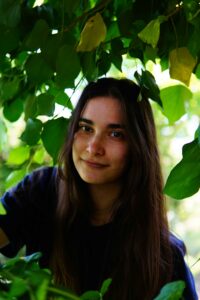
Marina Kontopoulou
Cohort Member at Ecogenia Traveling Crew 2026
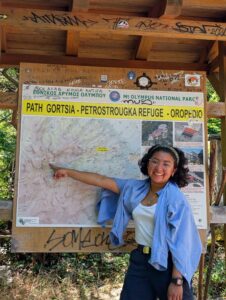
Mónica Yup Chinchilla
Corpsmember at the CCC Tahoe Center
During the Traveling Crew 2026 service project, Ecogenia joined forces in the field with members of the California Conservation Corps (CCC). As they worked on vital environmental projects across Greece, they discovered that a shared Mediterranean climate can bridge continents. In this post, Marina and Mónica reflect on how field science and a shared passion for botany brought them together.
Mónica:
One of my favorite subjects in school was botany. I love learning about plants and their names. When I first arrived in Greece everything was foreign. None of the plants seemed familiar. I felt excited to learn about Greece and it felt like a great opportunity to be open to new experiences.
Our traveling crew had an environmental data officer from Ecogenia, Marina. Her role was to collect pictures of flora and fauna at our project sites. She used the app iNaturalist to keep a record of the species we found on the field. Marina and I quickly bonded over our of plants and insects. She taught me about Greek plants and I taught her about insects.
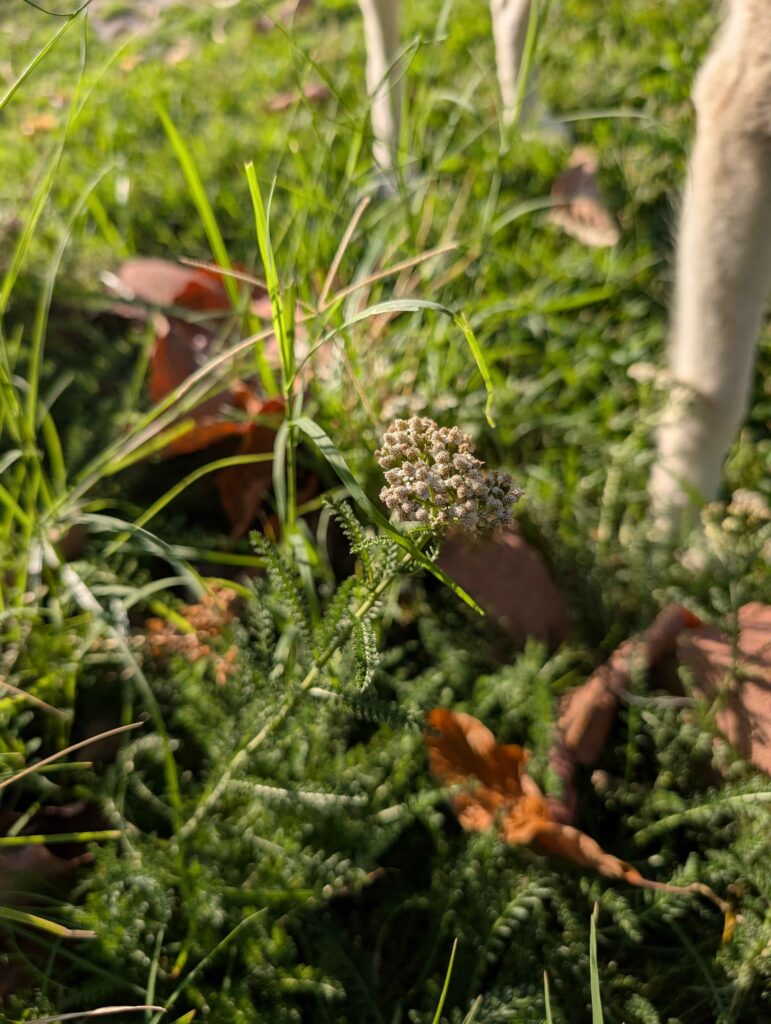
Our second project was at the Forest Village of Erymanthos, near the Bulgarian border with Greece, where we were doing light trail maintenance. While walking the trail I found a familiar sight, it was an Achillea, or commonly known as yarrow. Yarrow is very common in California. It has these white flowers and these very distinct leaves that fan out and look wispy. I could not believe my eyes. I snapped a picture and uploaded it to iNatauralist. It confirmed it, it was a plant in the genus Achillea. When I told my discovery to Marina, she told me that yarrow was very common in Greece as well. She recounted a story from her forestry class, where people loved this plant so much they called it Achilleas, like an old friend. Finding Achillea in Greece makes sense. California and Greece share a Mediterranean climate. Plants and animals in these climates tend to develop similar characteristics and adaptations in response to their environment.
As our two months went by, I started to see more plants in familiar genera: Epilobium (willowherbs), Cichorium (chicory), Allium (onions), among others. Each plant made me feel excited and homesick at the same time. Each time, Marina was there teach me about them. She reflected my excitement and dispelled my homesickness. We often discussed the plants that we found in the field. When we went to the Frakto Virgin Forest, she translates a whole page about Frakto and the plants we could find in the forest. It was a moment that made me feel seen. I had found someone across the world who shared the same passion as me. Someone who cares about me enough to translate for me.
It truly highlighted the bond between California and Greece. The fact that we share a climate makes Greece a familiar sight. Our shared climate is a shared experience. It’s like a mirror in a way. Similarly Marina and I are like a reflection of each other. It was truly fascinating that our interest in plants brought us together. Marinaki’s kindness made me feel at home in Greece.
Marina:
Taking nature walks with Mónica through all the places we visited made me realize just how deeply connected plants are to our lives. They’re something so ordinary that we often overlook them simply because we see them every day. Instead of being observed, appreciated, and celebrated, they quietly fade into the background.
Watching Mónica get excited about the flora of Greece and recognizing so many species that also grow in California and remind her of home, was incredibly heartwarming. It made me realize that home isn’t always a place; sometimes it’s a familiar flower, a scent, or a tree growing thousands of miles away.
There will always be a piece of home wherever we go, if we take the time to look closely enough. Maybe nature has been reminding us all along that, despite the distances between us, we’re more connected than we think.