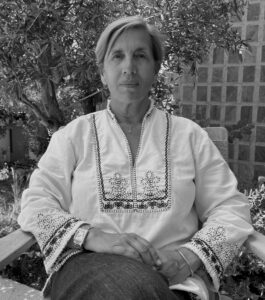
Cesaltine Gregorio
Ecogenia Board Member
In a deeply personal and evocative reflection, Cesaltine Gregorio shares the profound journey of conquering the ascent to Mytikas, the highest peak of Mount Olympus, despite a longstanding fear of heights. Her narrative transcends the physical challenge of navigating highly exposed Class III rock scrambles, evolving into a poignant meditation on the vital importance of mountain stewardship. Finding unexpected comfort and reassurance in the meticulously maintained red trail markers guiding her path, she draws a powerful parallel between the physical care of the mountain and the core mission of Ecogenia.

On July 19, 2026, I stood on Mytikas (2,917.7 m / 9,572.6 ft), the highest peak in Greece and, according to Greek mythology, the home of the ancient gods. I am very proud of this achievement – not only because the final climb to Mytikas is a highly exposed Class III rock scramble, but because I did it despite my longstanding fear of heights.
The first day, we hiked for about four hours to base camp. The first half was essentially a steep uphill climb – one that, in winter, is probably a steep snow-covered slope. About three hours into the hike, we crossed a wide, open area before reaching a narrow, vertical descent toward base camp. I was somewhere between two groups and began to worry that I might not know which way to go. Then I saw the red marks painted on the rocks, clearly indicating the path ahead and leading toward camp. Strangely, I felt reassured.
I have had my fair share of hikes: in the Alps while growing up; in Colorado when I was a graduate student; in Utah, when a ski trip turned into a hiking expedition because of a lack of snow; and in the Berkshires, where I have spent many weekends. Wherever I have hiked, I have relied on trails marked with paint on rocks or trees to make sure I could find my way back safely.
Mount Olympus was different. I had fallen behind the fast group but was moving faster than the slower one. Still, I knew I was unlikely to get lost. The mountainside was rocky and open, visibility was excellent, and I knew the guides were keeping an eye on hikers like me.
And yet, when I first saw those red marks on the rocks, they gave me an unexpected sense of comfort.
The following morning, as we began the ascent toward the area where we would start the climb to Mytikas, I noticed again how clearly the paths had been marked and maintained. That morning, I found myself thinking about the broader work required to preserve Mount Olympus and protect Greece’s natural environment – and about Ecogenia’s contribution to that effort at lower elevations: maintaining trails, carrying out wildfire-prevention work, removing waste from the mountain, and helping train young Greeks who may one day build careers in environmental fields.
At one of the rest stops, I realized that the sense of security I felt when I saw those marks came from knowing that people had taken responsibility for caring for the mountain and for those who visit it. It was the same sense of care, responsibility, and service that I associate with Ecogenia’s work.
I felt incredibly honored to be a very small part of Ecogenia – a group that does not simply talk about improving Greece’s future but is actively working to make it happen.